
Jaisalmer – Where History Meets the Heart of the Thar Desert
Jaisalmer, the pride of Rajasthan, is a destination that blends history, culture, and desert charm in the most enchanting way. Known as The Golden City, it stands like a glowing jewel in the middle of the Thar Desert, drawing travelers from across the world. From grand forts to peaceful lakes, from thrilling desert safaris to ancient villages, Jaisalmer offers an unforgettable travel experience. This detailed post will take you through the city’s magic, its royal past, and the adventures that make it a must-visit destination in India.
A Glimpse Into Jaisalmer’s Glorious Past
Founded in 1156 AD by Maharawal Jaisal Singh, Jaisalmer was once an important stop on the ancient Silk Route. Traders carrying silk, spices, and precious stones passed through this desert kingdom, bringing wealth that shaped its architecture and lifestyle. Today, the city stands as a living museum of Rajasthan’s golden era. Every street, haveli, and temple reflects stories of prosperity, courage, and craftsmanship.
The Majestic Jaisalmer Fort – Sonar Quila
At the center of the city rises the grand Jaisalmer Fort, a UNESCO World Heritage Site and one of the world’s few living forts. Made entirely of yellow sandstone, the fort glows like gold during sunrise and sunset—giving it the name Sonar Quila (Golden Fort).
Inside the fort, narrow lanes are lined with bustling shops, art galleries, rooftop restaurants, and centuries-old houses. You can explore ancient Jain temples, carved gateways, and palaces that once belonged to Jaisalmer’s royal family. Walking inside the fort feels like time has paused, allowing you to experience the charm of medieval India.
Havelis That Define Architectural Brilliance
Jaisalmer’s havelis are masterpieces carved from sandstone, famous for their unique jharokhas, balconies, and detailed filigree work.
Patwon Ki Haveli, with its five interconnected mansions, stands as the finest example of luxury from the merchant era.
Nathmal Ki Haveli is known for its mirror work and delicate artistry created by two craftsmen who built it from opposite ends and met in the middle.
Salim Singh Ki Haveli, with its peacock-shaped roof, is another architectural wonder. These havelis showcase unmatched craftsmanship and are a must-visit for travelers who love art and history.
Gadisar Lake – A Peaceful Escape
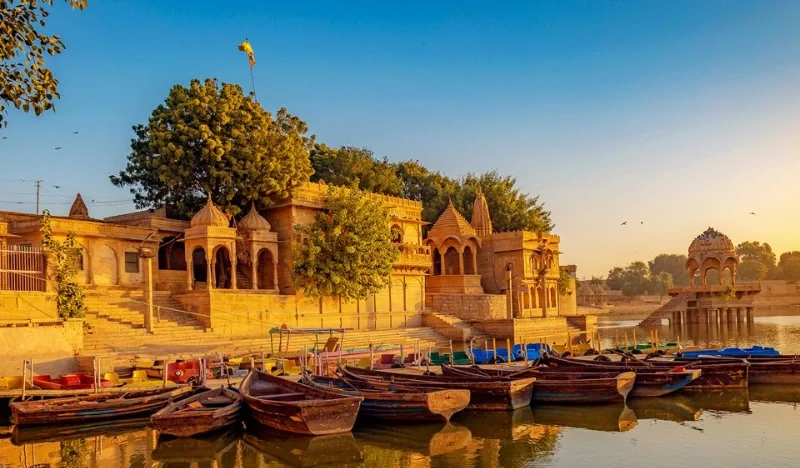
Located at the edge of the city, Gadisar Lake is a calm and scenic spot, perfect for relaxing after exploring the bustling streets. Built as a water reservoir centuries ago, it is surrounded by temples, ghats, and artistically carved chhatris. A boat ride on the lake during sunset offers picture-perfect views of the golden city. Migratory birds often visit the area during winter, making it a paradise for nature lovers.
Sam Sand Dunes – The Heart of Desert Adventure
A trip to Jaisalmer is incomplete without visiting Sam Sand Dunes, one of the most famous desert landscapes in India. With endless golden dunes stretching as far as the eye can see, this place captures the real beauty of the Thar Desert.
Tourists can enjoy:
- Camel Safari through the dunes
- Jeep Safari for an adventurous ride
- Quad biking
- Parasailing
- Dune bashing
The highlight is the sunset, where the sky turns orange and gold, creating a breathtaking view. After sunset, desert camps light up with music, folk dance, Rajasthani food, and cultural performances that give you a true taste of Rajasthan’s heritage.
Khuri Desert – A Calmer, Untouched Beauty
If you want a peaceful, less crowded desert experience, Khuri is the perfect choice. Located near the Pakistan border, Khuri offers wide stretches of dunes, more silence, and a raw, natural desert feel. Many travelers prefer Khuri for overnight stays because it feels more authentic and serene compared to the tourist-heavy Sam Dunes.
Kuldhara – The Village of Legends
Just 20 km from Jaisalmer lies the mysterious village of Kuldhara, abandoned over two centuries ago. The Paliwal Brahmins who lived here left overnight, and no one knows exactly why. Walking through the ruins—old houses, lanes, and temples—gives a haunting yet fascinating feeling. Many visitors come here to explore the history, take photographs, and experience the silence of this ghost village.
Bada Bagh – Where Kings Rest in Peace
Bada Bagh, meaning “Big Garden,” is a royal cenotaph complex where the rulers of Jaisalmer were cremated. The area is filled with beautifully carved chhatris surrounded by desert landscapes. During sunrise or sunset, the golden cenotaphs glow brilliantly, making it a favorite spot for photographers and couples.
The Culture & Colors of Jaisalmer
Jaisalmer’s culture is vibrant and full of life. You can see women in colorful ghagras, men wearing bright turbans, and traditional folk music echoing in every corner. Local markets like Sadar Bazaar and Manak Chowk are filled with handicrafts, embroidery, leather goods, and camel-skin products.
The food is equally delightful—Ker Sangri, Dal Baati Churma, Ghotua Ladoo, Laal Maas, and Kadhi Kachori are must-try dishes.
A Paradise for Photographers
From golden sunsets to ancient architecture, Jaisalmer offers endless photography opportunities. The contrast between the golden desert and the blue sky creates naturally beautiful frames. Whether you capture portraits of locals, the fort glowing in sunlight, or vast sand dunes—every shot tells a story.
Why Jaisalmer Is a Must-Visit Destination
Jaisalmer is more than a travel destination—it is an emotion. It is a blend of history, heritage, culture, adventure, and desert magic. Every traveler leaves with memories they cherish forever. Whether you want royal history, desert thrills, peaceful lakes, or cultural evenings, Jaisalmer gives you all of it in one trip.